
Blog
General
What “Causation” Means in Healthcare vs. Court—and Why It Matters
Doctors and courts use “causation” differently—and that gap can sink a legitimate TBI case. Here’s how to bridge it with objective evidence.
Board-certified physicians
Objective, FDA-approved testing
Multidisciplinary concussion rehab
For personal injury and workers' compensation cases,, "causation" is the bridge that connects an accident to a client’s disability. However, this bridge often feels like it's built from two different sets of blueprints.
For a physician, causation is a diagnostic tool used to determine the best path for treatment. For an attorney, causation is a legal requirement that must be proven to a specific evidentiary standard. When a doctor writes that a client’s symptoms are “consistent with” a motor vehicle accident, they believe they are being helpful. In a courtroom, however, that phrase can be a death knell for a case. Defense counsel will argue that "consistent with" is not "probative of," and suddenly, a legitimate brain injury is treated as a pre-existing condition or a coincidence.
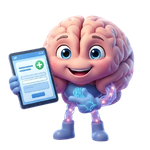
At All Things Neuro, we specialize in harmonizing these two definitions. Our mascot, Link, represents the "Link" between clinical reality and legal necessity. By utilizing objective neuro-diagnostics, we provide the data-driven evidence that turns medical "possibility" into legal "probability."
Healthcare Causation: The “Clinical Correlation”
To understand why medical records often fail in court, one must understand how a doctor’s brain works. In a clinical setting, causation is arrived at through a process called Differential Diagnosis.
The Focus on Treatment, Not Liability
A treating physician’s primary goal is to help the patient get better. If a patient presents with "brain fog" and headaches after a fall, the doctor looks for a "clinical correlation." They rule out immediate life-threats (like a brain bleed) and then focus on symptom management. To a doctor, knowing exactly which millisecond of the impact caused the axonal shearing is less important than knowing which vestibular exercise will stop the room from spinning.
The "Wait and See" Pitfall
Healthcare providers are trained to be conservative. They often adopt a "wait and see" approach, hoping that "standard rest" will resolve the concussion. While this is sound medical advice for a simple recovery, it creates a "gap in treatment" that defense adjusters love to exploit. If a doctor doesn't definitively link the cognitive decline to the accident in the first visit—often because they are waiting for symptoms to stabilize—the legal "proximate cause" becomes much harder to establish months later.
TBI as a Chronic Process
As the AMA Guides to the Evaluation of Permanent Impairment states, “TBI is not an event or a final outcome; it is the beginning of a chronic process.” Clinical causation in healthcare often misses the long-tail of this process because standard medical models are built for acute care, not the long-term documentation of a progressive neurological deficit.
Courtroom Causation: The “Proximate Cause”
While a doctor is looking for a path to healing, an attorney is looking for a path to liability. In the courtroom, causation is governed by the concept of Proximate Cause. This isn't just a clinical correlation; it is a legal determination that the defendant’s actions were the primary reason for the plaintiff’s injury.
The Legal Standard: Preponderance of the Evidence
In civil litigation, you don’t have to prove causation "beyond a reasonable doubt." You must meet the "more likely than not" standard—the 51% rule. However, when dealing with "invisible" injuries like mild TBI, reaching that 51% threshold is notoriously difficult without objective data. If the defense can introduce even a sliver of doubt—citing age-related memory loss or a minor fender bender from five years ago—they can argue that the accident wasn't the proximate cause.
The “But-For” Test
Attorneys must answer the "But-For" question: But for the defendant's negligence, would this client be suffering from these specific cognitive deficits? When a client has a "normal" MRI, the "But-For" test becomes a battle of experts. Without objective evidence to point to, you are essentially asking a jury to take your client’s word for it. In high-stakes litigation, "subjective reporting" is the weakest link in your chain of evidence.
Why the Gap Matters
The disconnect between how a doctor describes an injury and how a lawyer must prove it is where the value of a case is often lost. This "Causation Gap" is the primary weapon used by insurance companies to devalue claims.
Exploiting Medical Uncertainty
Insurance adjusters are trained to spot "soft" medical language. If your client’s medical records are filled with phrases like "patient reports" or "symptoms may be related to," the adjuster sees an opportunity. They will argue that the physician isn't actually certain about the cause, allowing them to offer a settlement that covers basic medical bills but ignores the long-term cognitive impairment.
The Expert Witness Burden
When a case goes to trial, your medical expert’s testimony must be defensible under cross-examination. An MD who relies solely on "clinical intuition" to establish causation is vulnerable. They can be painted as a "hired gun" or accused of ignoring the client’s pre-existing history. To bridge this gap, the expert needs a foundation of data that exists independently of the client's story.
The "Link" Insight: Data as the Bridge
This is where Link, our mascot, becomes your most valuable asset. Link represents the "Link" between the incident and the impairment. By providing FDA-approved objective testing, we remove the "maybe" from the conversation. We provide the data that allows a physician to shift their language from "consistent with" to "more likely than not," providing the legal weight necessary to justify the true value of the case.
How All Things Neuro Proves Causation Objectively
When the defense argues that a client's cognitive decline is due to "pre-existing factors" or "general life stress," they are relying on a vacuum of data. At All Things Neuro, we fill that vacuum with objective evidence that establishes a clear medical nexus between the traumatic event and the resulting impairment.
Temporal Proximity + Objective Deficit
We don’t just look at when the accident happened; we look at the specific neurological pathways that were disrupted. By utilizing FDA-approved ocular-motor and vestibular testing, we can identify deficits—such as saccadic latency or impaired gaze stability—that are characteristic of traumatic brain injuries and fundamentally inconsistent with normal aging or stress.
Mechanism of Injury Correlation
Our board-certified psychologists use Neuropsychological Evaluations (NPE) to show a cognitive profile that matches the physical mechanism of the injury. For example, if a client suffered a high-velocity frontal impact and now shows specific deficits in executive function and emotional regulation, the data creates a "neurological fingerprint" of that specific accident.
Standardized Impairment Ratings
We utilize the AMA Guides to the Evaluation of Permanent Impairment to provide a numeric value for the "Proximate Cause." By assigning a whole-person impairment percentage based on objective functional loss, we give attorneys a standardized, defensible metric that adjusters and juries can easily grasp.
Standardizing the Testimony
The final step in proving causation is the effective communication of that data. A medical report is only as strong as its ability to withstand a Daubert challenge or a rigorous cross-examination. We ensure that our findings are not just clinically sound, but "litigation-ready."
Moving Beyond "Soft" Language
We have moved away from the ambiguous clinical language that creates legal loopholes. Our reports are designed for the legal ecosystem, using specific, defensible terminology. We don't just state that a condition is "possible"; we provide the clinical foundation for "more likely than not."
The Power of Certainty
When our experts testify, they aren't relying on a one-time observation or a patient's self-report. They are pointing to standardized scores, percentile ranks, and FDA-cleared diagnostic outputs. This level of technical certainty makes it exceptionally difficult for defense experts to argue that the physician’s opinion is merely speculative.
A "Defense-Proof" Case File
By ensuring all testing is performed by board-certified professionals and includes built-in validity scales, we provide a case file that is inherently resistant to common defense tactics such as malingering accusations or "symptom magnification" claims.
Closing the Gap with Objective Data
Causation is not just a clinical footnote; it is the foundation upon which every successful TBI case is built. When there is a disconnect between the medical record and the legal requirement, the client is the one who pays the price. By bridging the gap between healthcare’s "clinical correlation" and the courtroom’s "proximate cause," we ensure that invisible injuries receive the visible, objective evidence they deserve.
At All Things Neuro, we are dedicated to providing the clarity that attorneys need to win and the answers that patients need to heal. Don’t let a lack of data devalue your client's case. Trust the "Link" between the accident and the evidence.
Take the next step in strengthening your TBI litigation strategy.
- Contact Us: Call 888-7-CONCUSSION or visit AllThingsNeuro.com / Neuro360Care.com.
- Corporate Office: 3535 Peachtree Road NE, #320, Atlanta, GA 30326.
Wellness Disclaimer
This content is intended to support education and awareness around health and wellness topics and does not replace personalized medical care. Individual needs vary, and readers are encouraged to consult with their healthcare provider to determine what is appropriate for their unique health situation.