Blog
Patients
When Neck Pain Isn't "Just Whiplash": Understanding Vertebral Artery Injury
Vertebral artery injuries can sometimes occur after whiplash or other neck trauma and may initially resemble an ordinary neck strain. Recognizing dizziness, vision changes, balance problems, and other neurological warning signs can help identify when emergency evaluation is needed.
Board-certified physicians
Objective, FDA-approved testing
Multidisciplinary concussion rehab
Most people walk away from a rear-end collision expecting a sore, stiff neck for a week or two. They pick up some ice packs, maybe see a chiropractor, and wait for things to settle. For many, that's exactly how it plays out. The neck heals, and life goes back to normal.
Sometimes, though, the same jolt that strains the muscles also affects the blood vessels running through the neck. One of those vessels, the vertebral artery, feeds the part of the brain that handles balance, vision, and coordination. An injury there can start out feeling a lot like ordinary whiplash, which is exactly why it deserves a closer look.
What Whiplash Actually Does to Your Neck
How a Sudden Jolt Strains Muscles and Ligaments
During a crash, your body is held by the seatbelt while your head keeps moving. The neck snaps backward and forward in a fraction of a second. That motion can overstretch the muscles, ligaments, and joints that support your head.
The result is usually some combination of:
- Neck pain and stiffness
- Reduced range of motion
- Tenderness in the shoulders or upper back
- Headaches that start near the base of the skull
What a Typical Recovery Looks Like
Whiplash symptoms often show up within a day of the accident. Many people notice steady improvement over several days to a few weeks. Gentle movement, rest, and guided therapy can help the tissues recover.
What Happens in a Vertebral Artery Injury?
Dissection, Explained Simply
The most common type is called a dissection. Think of the artery as a garden hose with a smooth inner lining. A dissection is a small tear in that lining, which lets blood seep between the layers of the wall.
That tear can cause two problems:
- Narrowing: The damaged wall can bulge inward and reduce blood flow.
- Clotting: A clot can form at the tear and travel to the brain, which may cause a stroke.
How Often Does This Happen After an Accident?
Vertebral artery injury is uncommon. Studies of hospitalized trauma patients have found blunt cerebrovascular injuries in roughly 0.5% to 2% of cases, with rates rising as screening becomes more thorough. Most people with whiplash will never have one.
Why Symptoms Can Show Up Hours or Days Later
A dissection doesn't always cause problems right away. A clot may take time to form or travel. Some people feel only neck pain or a headache at first, then develop neurological symptoms days later.
Warning Signs That Point Beyond Whiplash
Symptoms That Overlap With Ordinary Neck Strain
Both whiplash and vertebral artery injury can cause:
- Pain on one side of the neck
- Headache at the back of the head
- Stiffness or discomfort when turning the head
Red Flags That Need Emergency Care Right Away
(According to stroke awareness resources from the American Stroke Association, sudden numbness, speech difficulty, or severe balance problems are critical signs of interrupted blood supply to the brain.)
Why Telling Your Doctor About the Accident Matters
Always mention a recent crash or fall, even if it seemed minor. That detail can change which tests a clinician considers. A headache after a car accident may be evaluated very differently from one with no injury history.
Myth vs. Fact: Neck Pain After a Crash
Concussion, Vertebral Artery Injury, or Both?
Why Dizziness and Vision Changes Are Hard to Sort Out
Dizziness, blurry vision, headaches, and balance problems can come from several sources. A concussion can cause them. So can an inner ear (vestibular) injury or a neck injury. A vertebral artery injury can cause some of the same symptoms too.
How Objective Testing Adds Clarity
Once emergency causes are ruled out, lingering symptoms still deserve answers. At All Things Neuro, our team uses objective diagnostic tools to measure how the brain and visual system are working.
These may include:
- Oculomotor assessments that track how the eyes move, focus, and follow targets
- Vestibular assessments that look at balance and the inner ear's connection to the brain
- Concussion testing that measures cognitive and neurological function

How Doctors Check for and Treat Vertebral Artery Injury
Imaging That Looks at the Blood Vessels
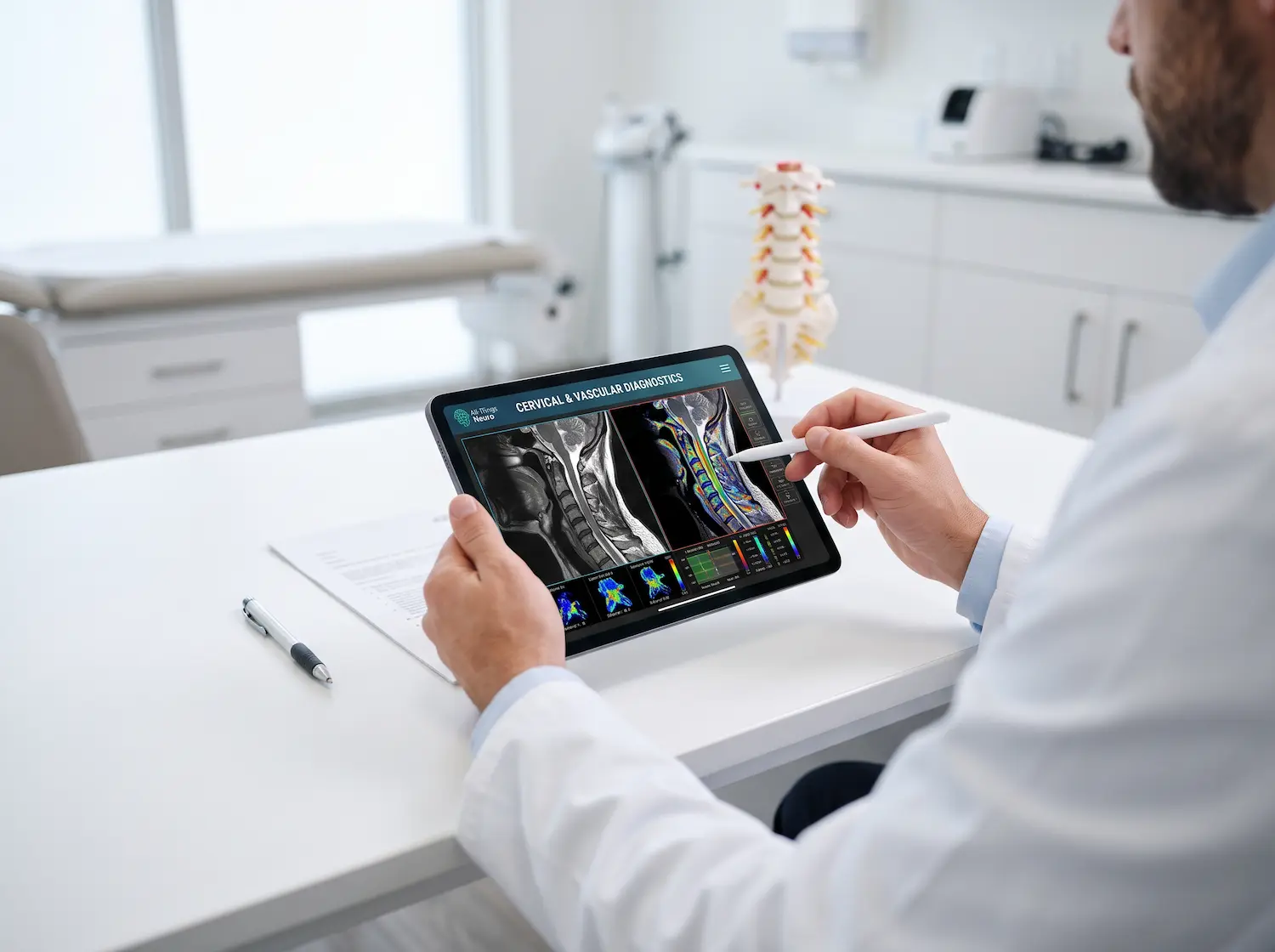
The most common tests include:
- CT angiography (CTA): A CT scan with contrast dye that highlights the arteries
- MR angiography (MRA): An MRI-based scan that creates detailed images of blood flow
(Clinical guidelines accessible via the National Institutes of Health (NIH / NCBI) emphasize CTA and MRA as primary non-invasive modalities for diagnosing blunt cerebrovascular and cervical artery injuries).
What Treatment Often Involves
Treatment depends on the type and severity of the injury. Many people are treated with medications that reduce the risk of clotting, such as antiplatelet drugs or blood thinners. Doctors may repeat imaging over time to monitor healing.
Keeping a Clear Record of Your Symptoms
Notes Worth Keeping After an Accident
Consider tracking:
- The date and time each symptom started
- Whether symptoms are getting better, worse, or changing
- Every appointment, test, and provider you've seen
- How symptoms affect work, driving, sleep, or daily tasks
- Observations from family members who notice changes you might miss
When an Injury Claim Is Part of the Picture
If your accident involves a personal injury claim, clear medical records become even more valuable. Objective test results document what's happening in a way that self-reported symptoms alone may not.
All Things Neuro works alongside BrainTrust, our legal-support arm, which provides independent medical examinations and expert evaluations when a case calls for them. Guided by our core mission & vision to deliver clinical integrity, your attorney can help you understand whether that kind of documentation applies to your situation. To discover more about our practice and clinical values, visit our about us page or explore our educational events for healthcare and legal professionals.
Quick Answers to Common Questions
Can whiplash damage an artery?
Yes, though it's uncommon. The same forceful motion that strains the neck can tear the inner lining of a vertebral or carotid artery.
How long after a car accident can a vertebral artery injury show up?
Symptoms may appear within hours, but some people develop them days later. New neurological symptoms after an accident should always be checked promptly.
Is dizziness after whiplash normal?
Mild dizziness can happen with neck strain or concussion. Sudden, severe, or worsening dizziness, especially with vision or speech changes, needs emergency care.
Who should I see if my neck pain isn't improving?
Start with your primary care provider or the clinician treating your injury. If dizziness, vision changes, or balance problems linger, a neurotrauma specialist can provide further evaluation.
Trusting What Your Body Tells You After a Crash
Recovery rarely follows a perfect script. A stiff neck that fades on schedule is reassuring, but symptoms that shift, spread, or surprise you are signals worth respecting. You know your body better than anyone, and noticing that something feels off is a good reason to speak up.
Asking questions doesn't mean overreacting. It means giving your care team the information they need to look in the right places. Whether the answer turns out to be simple or more involved, getting clarity early can make the path forward much easier to manage.
Get Clear Answers From the All Things Neuro Team
If dizziness, vision changes, headaches, or balance problems are lingering after an accident, our team can help you understand what's behind them. All Things Neuro provides objective neurotrauma diagnostics and personalized care plans for patients across Georgia and Ohio, serving individuals in specific states through our accessible clinical locations. Contact us or visit our website to request an evaluation and talk through your next steps.
📞 888-7-CONCUSSION 🌐 allthingsneuro.com 📍 3535 Peachtree Road NE, Suite 320, Atlanta, GA 30326
Follow us: Facebook | Instagram | LinkedIn
Wellness Disclaimer: This content is for informational purposes only and does not constitute medical advice. Please consult a qualified healthcare provider for diagnosis and treatment. If you are experiencing sudden neurological symptoms, call 911 immediately.
Legal Disclaimer: This content does not constitute legal advice and makes no claims about the outcome of any personal injury or workers' compensation case. Please consult a licensed attorney regarding your specific legal situation.