

Blog
Medical Providers
Why "Pushback" Happens After Concussion, and How Better Diagnosis Reduces It
Concussion symptoms are often questioned when medical records rely heavily on self-reported complaints or normal imaging results. Objective testing and detailed documentation can clarify functional deficits, support treatment decisions, and create a stronger picture of recovery.
Board-certified physicians
Objective, FDA-approved testing
Multidisciplinary concussion rehab
You've seen this patient three times now. The headaches haven't let up, reading a screen makes them nauseous, and their spouse says they keep losing track of conversations. Then a letter arrives describing the complaints as "subjective" with "no objective findings," and suddenly the care plan you built is on hold.
That moment is frustrating, but it's rarely random. Pushback after a concussion tends to land exactly where the medical record leaves room for doubt. When practitioners understand where those openings are, they can close many of them before anyone thinks to ask.
What Pushback Actually Looks Like After a Concussion
Insurers and Adjusters
Adjusters work from documentation, and they look for anything that makes a claim easier to limit. Common patterns include:
- Treatment denials that cite a lack of objective evidence
- Delayed authorizations for specialty referrals, therapy, or follow-up testing
- Records requests that expose gaps or inconsistencies across providers
Defense Reviewers and IME Physicians
In personal injury and disputed claims, reviewers often build their opinion around what the record does not show. They may point to a prior injury, question whether symptoms match the mechanism, or suggest the patient isn't giving full effort. A normal CT or MRI is frequently presented as proof that nothing happened to the brain.
Employers and Workers' Comp Carriers
In workers' compensation cases, the pressure usually centers on time. Employers and carriers may push for full duty before the worker is functionally ready. Light-duty restrictions can be challenged when they aren't tied to measurable findings.
The Quieter Kind: Doubt From Patients and Families
Some of the most damaging pushback never appears in writing. Patients who are repeatedly questioned often start doubting their own symptoms. Family members may wonder if their loved one is exaggerating. That doubt can quietly erode follow-through on rest, therapy, and return appointments.
Why Concussion Is So Easy to Question
Normal Imaging Is the Expectation, Not the Exception
CT scans are excellent at ruling out bleeding, fractures, and other structural emergencies. They are not built to capture the functional disruption behind most concussion symptoms. Standard MRI often looks normal as well.
When a reviewer reads "imaging unremarkable" as "no injury," they're misusing the test. Practitioners who explain that distinction in their notes help prevent that misreading from taking hold.
Symptoms That Overlap With Other Conditions
Many concussion symptoms have more than one possible explanation. As noted in clinical guidelines from the CDC HEADS UP program, mild traumatic brain injuries trigger complex neurometabolic cascades that can easily be confounded by surrounding factors. That overlap gives reviewers room to reassign the cause:
- Headaches blamed on neck strain or whiplash
- Sleep problems blamed on stress or pain
- Irritability and anxiety blamed on the legal process or job loss
- Concentration problems blamed on preexisting attention issues
Delayed and Fluctuating Presentation
Symptoms don't always appear on the day of injury. Some patients feel "off" for days before they recognize a problem. Others have good days and bad days. On paper, that variability can look like inconsistency, even though it fits a common recovery pattern.
When Self-Report Is the Only Record
A chart built entirely on patient report can be accurate in every detail and still be easy to challenge. Without a measurable anchor, every symptom becomes a question of credibility. That's the gap objective testing is designed to fill.
Where Documentation Breaks Down in Everyday Practice
Vague Chart Language
A note that says "patient reports headache" tells a reviewer very little. Compare that with a note describing frequency, severity, triggers, and effect on daily function. The second version shows a pattern and a real-world impact. Functional language (missed shifts, trouble driving, inability to read for more than ten minutes) carries more weight than symptom lists alone.
Gaps Between the Injury and the First Neurological Evaluation
Weeks can pass between an ER visit and a focused neurological assessment. Reviewers often frame that gap as evidence the injury was minor or unrelated. Earlier referral shortens the window and keeps the timeline easier to follow.
Missing Functional Measures
Without measurable data, there's no clear way to show change. Improvement, decline, or a plateau all look the same in narrative notes. That makes treatment decisions and return-to-work timelines harder to defend.
Inconsistent Histories Across Providers
The ER records one mechanism of injury. The chiropractor records another detail. The primary care note leaves out the loss of awareness the patient mentioned at intake. Small differences like these get highlighted during review.
Myth vs. Fact
- Myth: A normal CT means there's no brain injury.
- Fact: CT rules out structural emergencies. It isn't designed to detect most concussion-related dysfunction.
- Myth: No loss of consciousness means no concussion.
- Fact: Many concussions occur without any loss of consciousness.
- Myth: Symptoms that come and go aren't credible.
- Fact: Fluctuating symptoms are common during concussion recovery.
What Better Diagnosis Looks Like
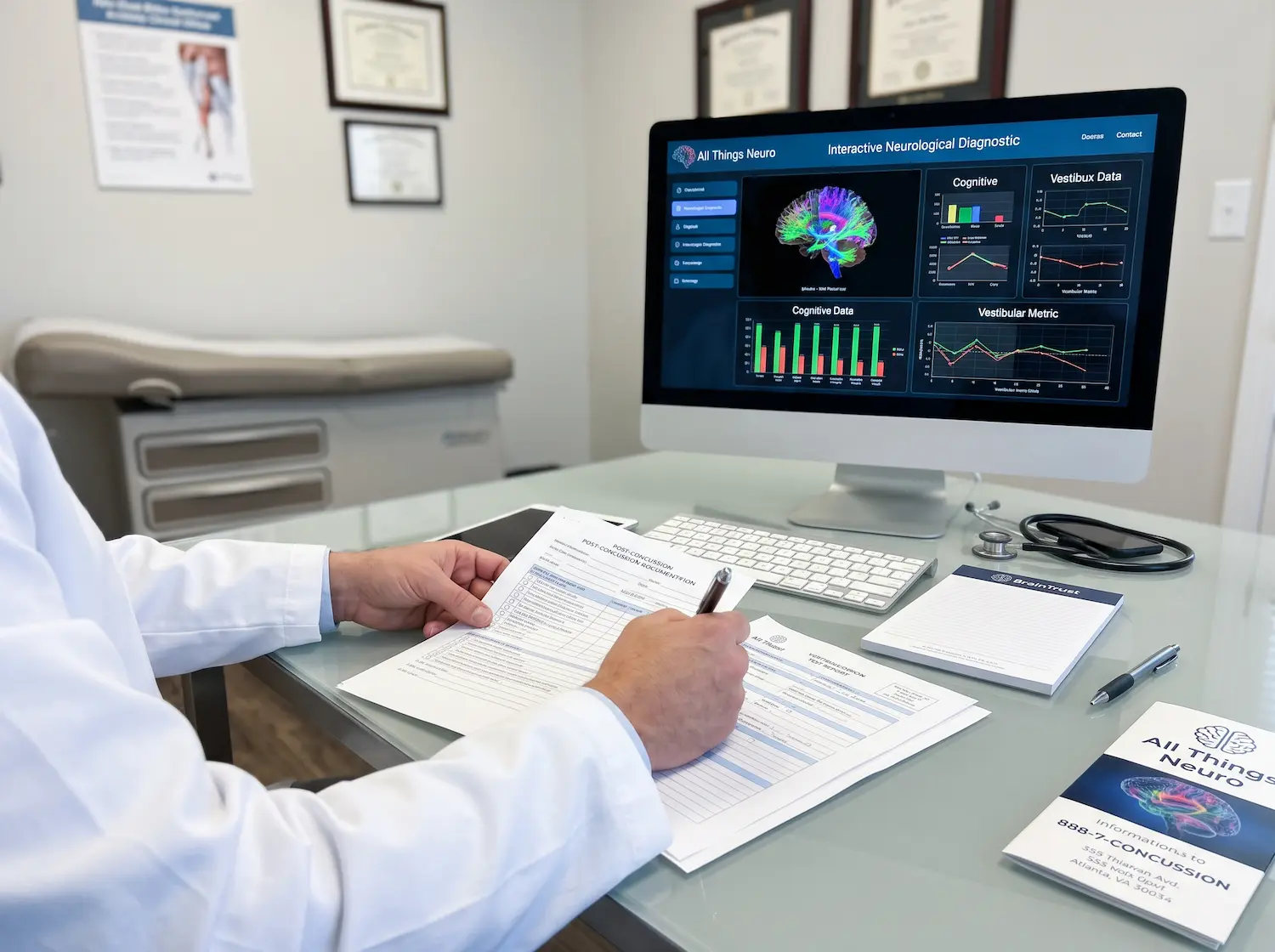
Oculomotor and Vestibular Assessments
Dizziness, blurred vision, and trouble reading are among the most common post-concussion complaints. Clinical studies published via PubMed / NCBI demonstrate that objective vestibular and oculomotor screenings reliably capture deficits that traditional physical exams miss. When findings line up with what the patient describes, the complaint stops being "subjective."
Neurocognitive Testing and Neuropsychological Evaluations
Brain fog is hard to document in words. Neurocognitive testing can quantify attention, processing speed, and memory. A full neuropsychological evaluation goes further by interpreting those results alongside history, mood, and other contributing factors.
Sleep Evaluation
Sleep disruption after brain injury affects mood, cognition, and recovery speed. Objective sleep data can help clarify whether fatigue and concentration problems have a measurable sleep component. That information can also point toward targeted treatment.
Validity and Effort Measures
This is the piece many referring providers don't realize is available. Well-designed evaluations can include performance validity measures, which help show whether test results reflect genuine effort. When those measures are in the record, the "malingering" argument has far less to stand on. At the heart of our mission & vision, we believe that every patient deserves an evaluation anchored in objective clarity.
How Objective Findings Change the Conversation
Treatment Authorization
Measurable findings can support medical necessity for vestibular rehab, cognitive therapy, and specialist care. Requests tied to specific deficits are generally easier to justify than requests based on symptom reports alone.
Personal Injury Cases and Records Review
In PI matters, attorneys rely on records that are organized, consistent, and clinically grounded. Objective testing gives them findings they can point to directly. When cases need expert support, All Things Neuro's legal services arm, BrainTrust, provides expert witness testimony, independent medical examinations, and impairment ratings built on that same clinical foundation.
Workers' Comp Return-to-Work Decisions
Case managers need restrictions that match what the worker can actually do. Objective findings help define realistic duty limits and timelines. They can also show when a worker is ready to progress, which benefits everyone involved.
A Practitioner's Referral Checklist
Signs It's Time to Refer
- Symptoms persist beyond the first couple of weeks
- Dizziness, visual complaints, or balance problems are present
- Cognitive struggles are affecting work, school, or driving
- A personal injury or workers' comp claim is involved
- The patient has a history of prior concussions
- Symptoms seem out of proportion to normal imaging
What to Document Before You Refer
A few details in your note can make the downstream evaluation stronger:
- Mechanism of injury in the patient's own words
- Symptom onset, frequency, and specific triggers
- Functional impact on work, home, and daily routines
- Relevant history, including prior head injuries and existing conditions
Clearer Findings, Fewer Arguments
Referring practitioners are often the first clinicians in a position to shape how a concussion is documented. The choices made in those early visits, from chart language to the timing of a referral, influence how the case is read weeks or months later. Objective testing supports your clinical judgment rather than replacing it.
When the record holds measurable findings, reviewers have less room to dismiss what you've observed. Patients get care that matches their actual deficits. Your notes carry more weight, and your referrals become part of a stronger, more defensible picture of recovery. To learn more about our multidisciplinary background, visit about us or check out our upcoming educational events designed for healthcare providers.
Add Objective Neurotrauma Testing to Your Referral Network
If you're treating patients with lingering or disputed concussion symptoms, All Things Neuro can help. Our team provides objective neurotrauma diagnostics, including oculomotor, vestibular, cognitive, and sleep assessments, with reporting designed to support your care plan across our regional locations and network across multiple states. Contact us directly to discuss a referral or learn how we work alongside your practice
📞 888-7-CONCUSSION 🌐 allthingsneuro.com 📍 3535 Peachtree Road NE, Suite 320, Atlanta, GA 30326
Follow us: Facebook | Instagram | LinkedIn
Wellness Disclaimer: This content is for informational purposes only and does not constitute medical advice. Please consult a qualified healthcare provider for diagnosis and treatment.
Legal Disclaimer: This content is not legal advice and does not guarantee any claim, case, or authorization outcome. Individuals involved in personal injury or workers' compensation matters should consult a qualified attorney regarding their specific situation.