Blog
Patients
"It's All in Your Head" Isn't a Diagnosis: Understanding Brain-Behavior Symptoms
Brain injuries can cause measurable changes in mood, personality, emotional control, and behavior. Testing can help identify these changes and guide treatment for patients and families.
Board-certified physicians
Objective, FDA-approved testing
Multidisciplinary concussion rehab
A few months after a rear-end collision or a fall from a loading dock, many people hear some version of the same sentence. The scans came back clear, so the irritability, the tears that show up out of nowhere, and the new short fuse must be stress. Maybe counseling is suggested, or maybe nothing is. Meanwhile, family members notice something harder to explain away: this person doesn't seem like themselves.
The odd part is that the phrase is partly accurate. These symptoms often do come from the head, specifically from brain systems that manage emotion, impulse control, and focus. When an injury disrupts those systems, the resulting changes are neurological. They can be assessed and treated with the same seriousness as any other injury.
What Are Brain-Behavior Symptoms?
Brain-behavior symptoms are changes in mood, personality, emotional control, or impulse regulation that stem from how the brain is functioning. After a concussion or traumatic brain injury (TBI), they can appear alongside headaches and dizziness, or entirely on their own.
The Symptoms People Describe Most Often
Patients and families tend to describe changes like these:
- Irritability or a much shorter temper
- Sudden crying or emotional flooding that feels out of proportion
- New anxiety, worry, or feeling constantly on edge
- Low mood, flatness, or loss of motivation
- Impulsive comments or decisions that feel out of character
- Pulling away from crowded, noisy, or busy places
- Sleep changes that make everything else harder
How These Differ From Ordinary Stress
Everyday stress usually has a clear source and eases with rest. Brain-based symptoms often follow an injury and mark a clear shift from the person's usual baseline. They tend to persist even when life calms down. One telling clue is that the person may be just as confused by their reactions as everyone around them.
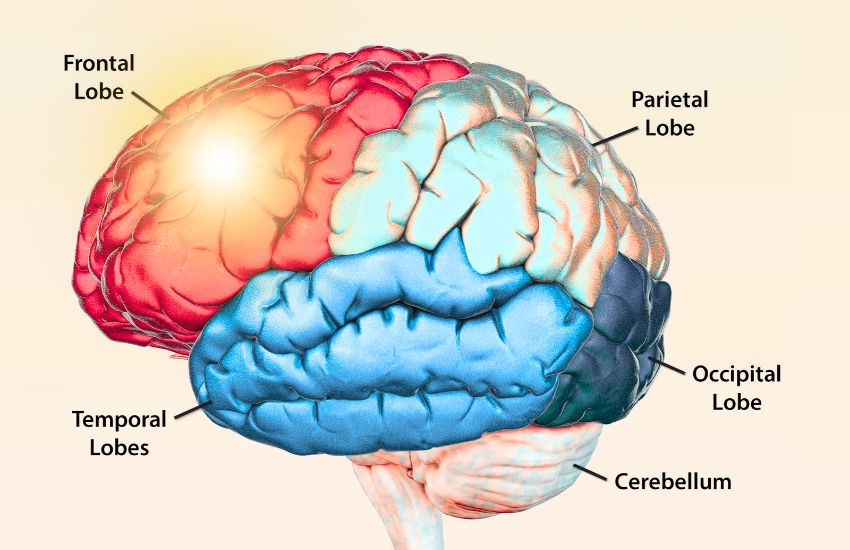
Why a Head Injury Can Change Mood and Personality
The Frontal Lobes: The Brain's Braking System
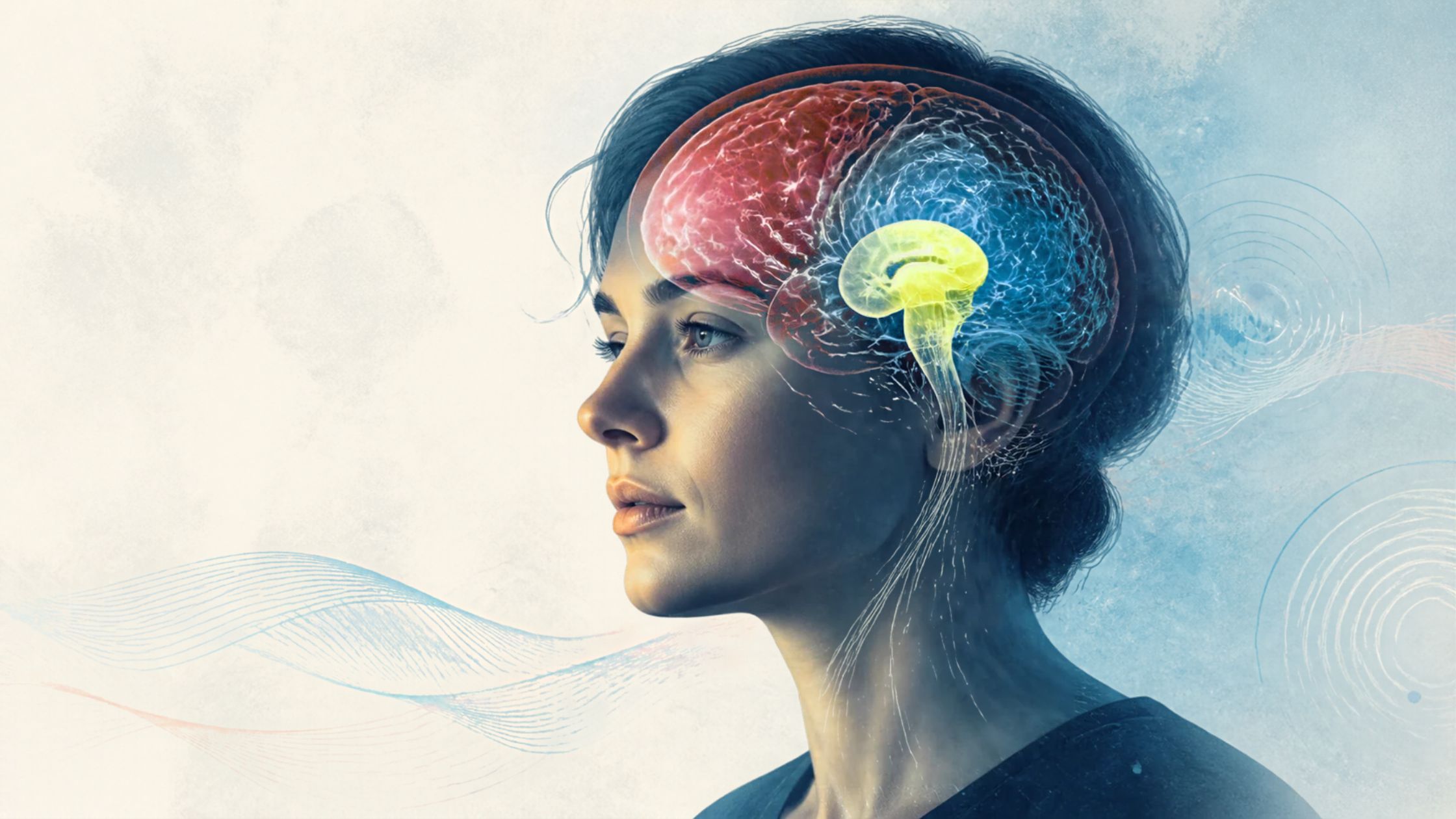
The frontal lobes help us pause before reacting, plan ahead, and keep emotions in proportion. They sit behind the forehead, close to the bony ridges of the skull. In a sudden stop or impact, this area is especially vulnerable. When the brakes weaken, frustration can become an outburst before the person has a chance to catch it.
The Limbic System and Emotional Regulation
Deeper structures in the limbic system help generate emotion and register threat. Normally, the frontal lobes keep those signals in check. After an injury, communication between the two can falter, so feelings may arrive faster and land harder.
Disrupted Connections, Not Just Bruising
Many brain injuries involve strain on the brain's long connecting fibers, known as diffuse axonal injury. Picture damaged wiring rather than a visible dent. These changes can be too subtle for a standard CT scan, yet they can slow how brain regions share information.
The Domino Effect
Behavior changes rarely travel alone. Several other post-injury problems can quietly drain the brain's reserves:
- Poor or broken sleep
- Persistent headaches
- Eye-tracking or focusing problems that make screens and reading exhausting
- Balance and vestibular issues that make busy places overwhelming
Why These Symptoms Get Overlooked
What Emergency Imaging Is Designed to Show
Emergency imaging is designed to catch bleeding, swelling, and fractures. It isn't designed to measure processing speed, emotional regulation, or how the brain handles fatigue. A clean scan is good news. If symptoms continue, a specialist can help determine whether further assessment is appropriate.
Delayed Symptoms Make the Connection Harder to See
Emotional changes may surface days or weeks after the injury. By then, the person is often back at work and facing new pressures. It becomes easy to blame the job or the finances.
Overlap With Anxiety, Depression, and PTSD
Brain injury symptoms can resemble psychological conditions, and the two can coexist. A frightening accident can trigger trauma responses while also injuring the brain. Sorting out what drives the symptoms takes careful testing, not a quick label.
What Families and Coworkers Notice First
The injured person is often the last to notice these changes. Family members and coworkers usually see them first.
How Testing Helps Clarify Brain-Based Symptoms
What a Neuropsychological Assessment Measures
A neuropsychological assessment uses standardized tests to measure attention, memory, processing speed, executive function, and emotional functioning. Results are compared with norms for people of similar age and education. This turns "he seems different" into specific findings a specialist can interpret.
Oculomotor and Vestibular Assessments
These tests look at how the eyes track and focus and how the balance system responds to movement. Problems in either area can drive fatigue, headaches, and irritability. Identifying them gives the care team a concrete target for rehabilitation.
Sleep Assessment and Its Role in Mood
Sleep disruption after brain injury is common and can intensify nearly every emotional symptom. A sleep study may identify problems that would otherwise be mistaken for a mood disorder.
Pulling the Findings Together
The real value comes from combining results. When cognitive, visual, vestibular, and sleep findings line up, the picture becomes clearer for the patient, the family, and the care team. Our specialists interpret the results alongside the patient's history and presentation, then recommend appropriate next steps.
Getting Back to Work and Daily Life
Irritability, slowed thinking, and sensory overload can affect both safety and job performance. Assessment findings can help the care team:
- Recommend activity and return-to-work plans that match the person's current abilities
- Identify accommodations, such as reduced noise or screen time
- Track progress over time
Putting a Real Name to What Changed
Behavior changes after an injury deserve the same attention as a sprained wrist or a broken rib. When they're brushed aside, people can spend months doubting themselves while their families guess at what's going on.
Clear testing replaces that uncertainty with information. Patients can make sense of their own reactions, families can respond with patience instead of frustration, and the care team has a clear starting point for next steps.
Talk With the All Things Neuro Team
If you or someone you care for has felt off since an injury, you can request an appointment through our online form at intake.allthingsneuro.com. Our team follows up to coordinate scheduling and access. Our specialists interpret the results alongside the patient's history and recommend appropriate next steps.
📞 888-7-CONCUSSION 🌐 allthingsneuro.com 📍 3535 Peachtree Road NE, Suite 320, Atlanta, GA 30326
Follow us: Facebook | Instagram | LinkedIn
Wellness Disclaimer: This content is for informational purposes only and does not constitute medical advice. Please consult a qualified healthcare provider for diagnosis and treatment.
Legal Disclaimer: This content does not constitute legal advice and does not guarantee any case or claim outcome. Please consult a qualified attorney regarding your specific legal situation.